25 Beautiful Wedding Invitation Ideas for Every Wedding Style
Wedding invitations are more than just cards that share the date and location of a celebration. They give guests their first impression of the wedding and introduce the style, atmosphere, and personality of the couple.
Whether you are planning a classic celebration, a modern wedding, or a relaxed outdoor event, the right invitation design can help communicate your wedding theme beautifully.
From elegant floral details to simple minimalist layouts, there are many ways to create invitations that feel special and memorable.
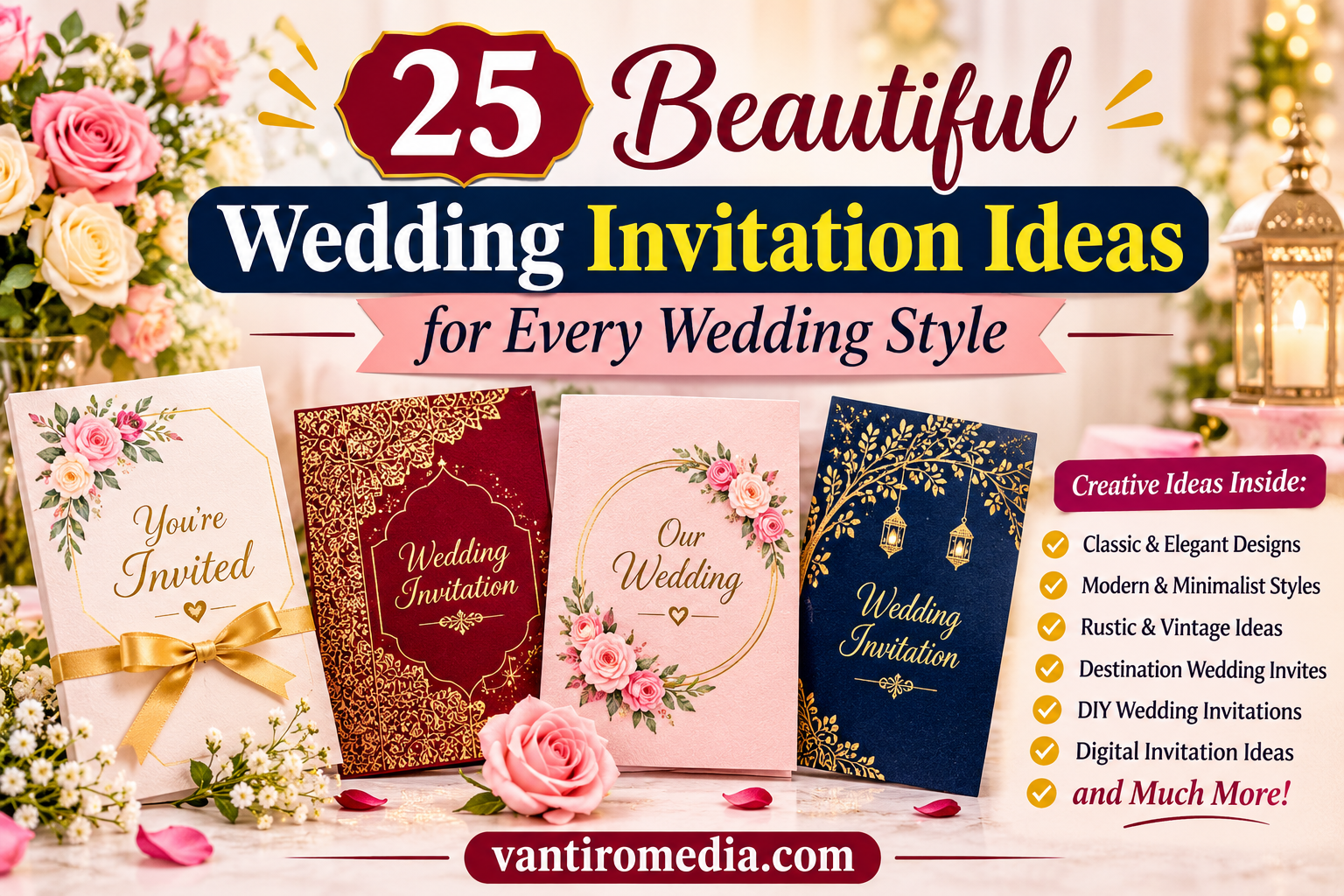
In this guide, you will discover 25 beautiful wedding invitation ideas, along with helpful tips for choosing colors, fonts, layouts, and wording that match your celebration.
1. Classic Elegant Wedding Invitations
Classic wedding invitations are a popular choice for couples who appreciate timeless designs. They often feature clean layouts, traditional typography, and balanced decorative details.
Consider using:
- White or ivory backgrounds
- Black or dark gray text
- Elegant serif fonts
- Thin borders or subtle decorative lines
- Gold or silver accents
This style works particularly well for formal weddings, ballroom celebrations, and traditional ceremonies.
2. Minimalist Wedding Invitations
Minimalist invitations focus on simplicity rather than heavy decoration. They use plenty of open space, clear typography, and a limited color palette.
A simple white background with elegant black lettering can create a sophisticated appearance without unnecessary design elements.
Minimalist designs are suitable for modern weddings, intimate ceremonies, and couples who prefer a clean aesthetic.
3. Floral Wedding Invitations
Floral invitations bring a romantic and natural feeling to wedding stationery.
You can explore designs featuring:
- Soft watercolor roses
- Delicate wildflowers
- Green botanical leaves
- Small floral borders
- Large floral illustrations
Choose flowers and colors that complement your wedding decorations. For example, blush flowers and greenery can work beautifully with a soft garden-inspired theme.
4. Rustic Wedding Invitations
Rustic invitations are inspired by natural textures and countryside settings.
Popular design elements include kraft-paper backgrounds, wooden textures, botanical illustrations, and warm earthy colors.
These invitations can complement barn weddings, outdoor celebrations, and relaxed countryside events.
5. Modern Geometric Invitations
Geometric invitations use shapes, lines, and creative arrangements to produce a contemporary look.
Common elements include:
- Arch-shaped designs
- Circular borders
- Abstract line patterns
- Asymmetrical layouts
- Simple geometric illustrations
Neutral colors with one contrasting accent can help keep the design balanced.
6. Luxury Gold Foil Invitations
Gold foil details can give wedding invitations a glamorous appearance.
They are often used for names, borders, decorative patterns, or small design accents.
For a balanced result, combine gold details with ivory, cream, black, or deep green. Avoid adding too many decorative elements if you want the invitation to remain easy to read.
7. Romantic Blush Pink Invitations
Blush pink is a soft color that works well with romantic wedding themes.
It can be combined with cream, champagne, dusty rose, or light gray.
Consider using delicate floral illustrations, elegant lettering, and subtle borders to create a coordinated design.
8. Black and White Wedding Invitations
Black and white invitations are simple, versatile, and suitable for many wedding styles.
A white background with black typography offers strong readability, while a black background with white lettering creates a more dramatic appearance.
This color combination is especially suitable for formal and contemporary celebrations.
9. Destination Wedding Invitations
Destination wedding invitations can introduce guests to the location and atmosphere of the celebration.
Design ideas include:
- Tropical leaves for beach weddings
- Palm tree illustrations
- Coastal colors such as blue and sand
- Vintage travel-inspired layouts
- Simple maps or location illustrations
Make sure the invitation clearly displays the event date, venue, and important travel information.
10. Beach Wedding Invitations
Beach-themed invitations often use soft blue, sandy beige, and sea-inspired details.
You can include watercolor waves, seashell illustrations, palm leaves, or subtle coastal patterns.
These designs are suitable for seaside ceremonies and destination weddings.
11. Vintage Wedding Invitations
Vintage invitations take inspiration from traditional stationery and older design styles.
Popular elements include decorative frames, antique-inspired typography, muted colors, and delicate ornamental details.
Cream, burgundy, dusty blue, and muted gold can work well for this style.
12. Greenery Wedding Invitations
Greenery invitations feature leaves, branches, and botanical illustrations.
Eucalyptus, olive branches, and simple green foliage are common design choices.
They work especially well for garden weddings, outdoor ceremonies, and nature-inspired celebrations.
13. Watercolor Wedding Invitations
Watercolor invitations use soft painted effects to create an artistic appearance.
Popular watercolor elements include flowers, landscapes, abstract backgrounds, and soft color washes.
Because watercolor designs can include several colors, keep the text area clear so guests can easily read the important details.
14. Boho Wedding Invitations
Bohemian-inspired invitations often feature natural colors, organic shapes, and artistic illustrations.
You might consider:
- Terracotta and beige colors
- Dried-flower illustrations
- Pampas grass designs
- Sun-inspired shapes
- Hand-drawn decorative details
These styles can complement relaxed outdoor and bohemian-themed weddings.
15. Monogram Wedding Invitations
A monogram invitation features the initials of the couple as a central design element.
The initials may appear inside a decorative frame, above the wedding details, or as a subtle background pattern.
Choose a design that keeps the names and event information easy to recognize.
16. Digital Wedding Invitations
Digital wedding invitations are convenient for couples who prefer to share their event details online.
They can be sent through email, messaging apps, or digital invitation platforms.
Useful digital invitation features may include:
- Clickable venue directions
- RSVP links
- Event schedules
- Wedding website links
- Mobile-friendly layouts
Before sending, test the invitation on both desktop and mobile screens.
17. Photo Wedding Invitations
Photo invitations include a photograph of the couple as part of the design.
A favorite engagement photograph can make the invitation feel more personal.
For the best result, choose a clear image with enough open space for the event details. Avoid placing text over busy parts of the photograph.
18. Transparent Wedding Invitations
Transparent invitations use clear or translucent materials to create a modern appearance.
They may include white lettering, simple borders, or small decorative accents.
Because transparent surfaces can make text difficult to read, consider using enough contrast and a suitable background.
19. Navy Blue Wedding Invitations
Navy blue is a rich color that can create a formal and sophisticated look.
It pairs well with:
- Gold accents
- White typography
- Ivory backgrounds
- Silver details
- Soft blush elements
This combination works particularly well for evening weddings and formal celebrations.
20. Pastel Wedding Invitations
Pastel invitations use soft shades such as lavender, mint, peach, pale blue, and blush pink.
These colors can create a gentle and cheerful appearance without overwhelming the layout.
You can choose one main pastel shade and combine it with a neutral background for a coordinated design.
21. Handwritten Typography Invitations
Handwritten-style fonts can add a personal and romantic touch to wedding stationery.
They are often used for the couple’s names or short decorative phrases.
For the remaining details, use a simple and readable font. This helps guests understand the information without struggling with decorative lettering.
22. Arch-Shaped Wedding Invitations
Arch-shaped invitations feature a curved top edge instead of a traditional rectangular format.
They offer a modern appearance and work well with minimalist, floral, and contemporary wedding themes.
You can keep the design simple with a neutral background, elegant names, and a small decorative detail.
23. Cultural and Traditional Wedding Invitations
Couples may want their invitations to reflect family traditions, cultural celebrations, or meaningful design elements.
Depending on the wedding style, this could include traditional patterns, symbolic colors, decorative borders, or culturally relevant illustrations.
Choose details that genuinely reflect the celebration and ensure all event information remains clear.
24. Layered Wedding Invitation Sets
Layered invitation sets combine several coordinated stationery pieces.
A set might include:
- Main wedding invitation
- RSVP card
- Details card
- Reception information
- Envelope
Using matching colors, fonts, and decorative elements helps the complete set look consistent.
25. Simple Budget-Friendly Wedding Invitations
Beautiful invitations do not always require expensive printing or elaborate decoration.
A budget-friendly design can still look polished with a few thoughtful choices.
Consider using:
- A simple two-color palette
- Standard invitation sizes
- Clean typography
- Limited decorative details
- Digital invitations where appropriate
Compare printing and delivery costs before choosing your final design.
How to Choose the Right Wedding Invitation Design
With so many styles available, choosing one can feel difficult. Start by considering the overall look and practical needs of your wedding.
Match the Invitation to Your Wedding Theme
Your invitation should give guests an idea of the celebration’s style.
For example, a garden wedding may suit botanical illustrations, while a formal evening event may look better with classic typography and elegant colors.
Choose Colors Carefully
Think about your wedding color palette before selecting an invitation.
You do not need to use every wedding color. One or two main colors with a neutral background are often enough to create a coordinated look.
Select Readable Fonts
Decorative fonts can look beautiful, but readability should come first.
Use decorative lettering for names or short phrases and a clear font for dates, addresses, and other important details.
Consider Your Budget
Your invitation budget should include more than the design itself.
Remember to consider printing, envelopes, postage, additional inserts, and delivery costs when comparing options.
Decide Between Printed and Digital Invitations
Printed invitations offer a traditional physical keepsake, while digital invitations are convenient for online sharing.
Your choice may depend on your guest list, budget, preferred style, and how you plan to manage RSVPs.
What Information Should a Wedding Invitation Include?
A well-designed invitation should provide guests with the essential details of the celebration.
Make sure to consider including:
- Names of the couple
- Wedding date
- Ceremony time
- Venue name and address
- Reception information, if applicable
- RSVP deadline and response method
- Dress code, if relevant
- Wedding website or additional details, when needed
Before printing or sending digital invitations, carefully check all names, dates, addresses, and contact information.
Common Wedding Invitation Mistakes to Avoid
Even a beautiful design can become confusing if important details are missing.
Avoid these common mistakes:
Using difficult-to-read fonts: Very decorative lettering can make event details hard to understand.
Choosing poor color contrast: Light text on a light background may be difficult to read.
Forgetting important information: Always review the date, venue, and RSVP details.
Ordering without checking a proof: Review a digital or printed proof before approving a large order.
Ignoring delivery time: Allow enough time for printing, addressing, and mailing invitations.
Adding too many design elements: Too many colors, fonts, and illustrations can make the invitation look crowded.
Final Thoughts
Wedding invitations help introduce guests to the style and atmosphere of a special celebration. Whether you prefer classic elegance, modern minimalism, romantic florals, or creative digital designs, the best invitation is one that reflects your wedding theme and communicates the important details clearly.
Take time to compare different styles, choose a suitable color palette, and review the wording before sending your invitations.
Explore different ideas, save the designs you like, and use them as inspiration when creating an invitation that feels right for your celebration.
Frequently Asked Questions
What is the most popular style of wedding invitation?
There is no single style that suits every couple. Classic, minimalist, floral, and modern designs are all common choices. The best option depends on the wedding theme and personal preferences.
When should wedding invitations be sent?
For many weddings in the United States, invitations are commonly sent around six to eight weeks before the event. Destination weddings and celebrations involving significant travel may require more advance notice.
What colors are best for wedding invitations?
White, ivory, blush pink, sage green, navy blue, and champagne are popular design choices. Select colors that complement your wedding theme and provide enough contrast for readable text.
Are digital wedding invitations a good option?
Yes. Digital invitations can be convenient for sharing event details and collecting RSVPs. They are particularly useful when guests are comfortable receiving information online.
Should wedding invitations match the wedding theme?
Matching the invitation to the wedding theme can create a more coordinated experience. However, it does not need to match every decoration exactly. A few shared colors or design elements are usually enough.