
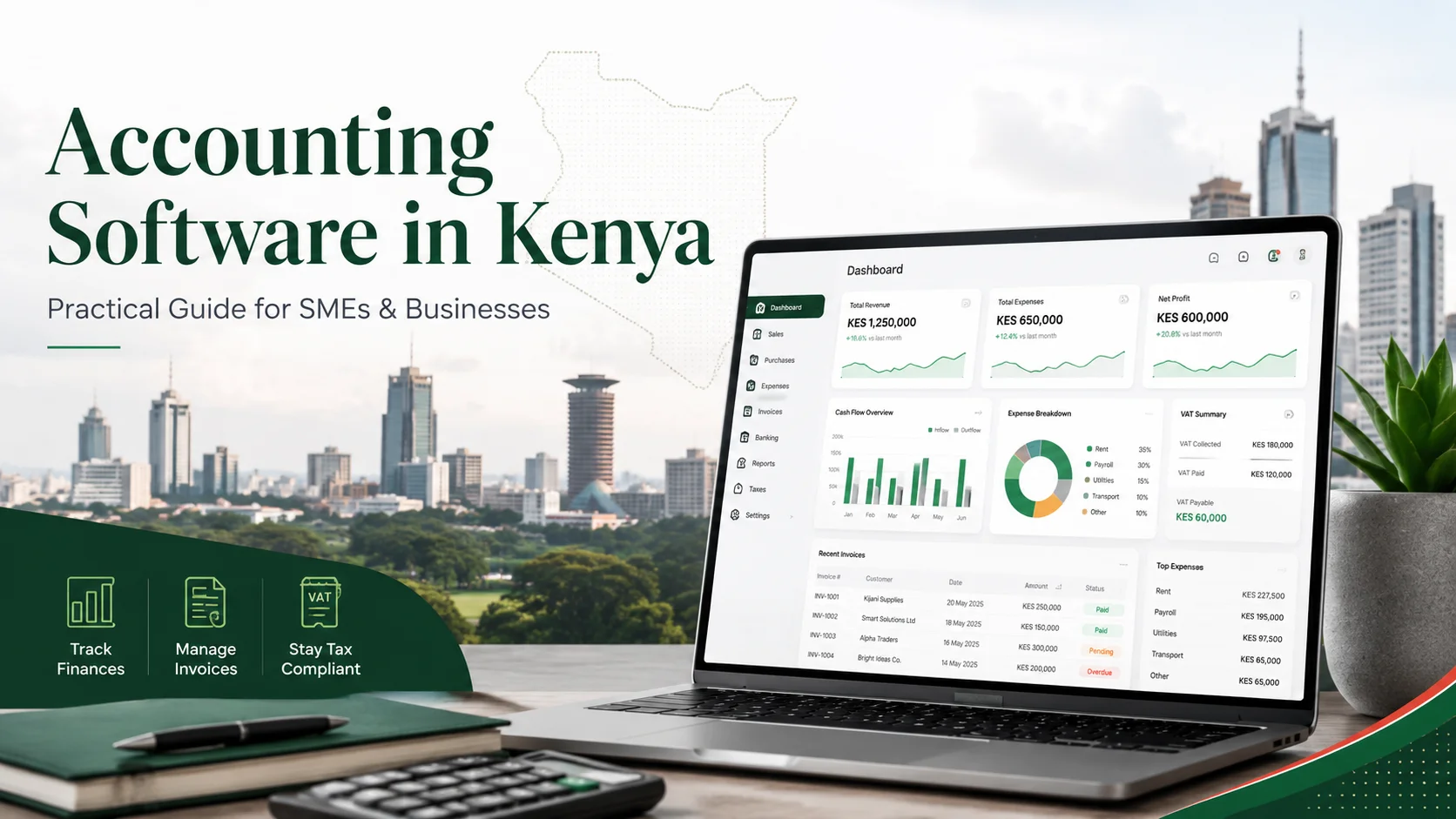
Choosing the right accounting software in Kenya is not just about picking the most popular tool. A Kenyan business needs software that can handle invoices, expenses, VAT records, financial reports, stock, cash flow, and tax-related workflows without making daily bookkeeping harder.
The wrong software creates more problems than it solves. It can confuse your team, waste money, produce weak reports, and still leave you struggling with VAT or eTIMS requirements. The right software should make your accounts cleaner, faster, and easier to review.
This guide explains what accounting software does, who needs it, what features matter in Kenya, how eTIMS and VAT fit into the decision, and how to compare options before paying.
Quick Answer: What Is the Best Accounting Software in Kenya?
The best accounting software in Kenya depends on your business size, budget, tax needs, and how complex your operations are.
For many small businesses, freelancers, consultants, shops, and SMEs, cloud accounting software is usually the most practical starting point because it supports invoicing, expense tracking, reports, and accountant access.
If you are still comparing tools, start with this detailed guide on <a href=”https://vantiromedia.com/best-accounting-software-for-small-businesses-in-kenya/“>best accounting software for small businesses in Kenya</a>. It gives a more focused look at options for Kenyan SMEs.
A serious business should not choose software only because someone online says it is “the best.” You need to check whether it fits your actual work: invoices, VAT, eTIMS, inventory, users, reports, pricing, and support.
Why Kenyan Businesses Need Accounting Software
Many small businesses in Kenya start with notebooks, receipts, WhatsApp records, or Excel sheets. That can work for a short time, but it becomes risky as the business grows.
Accounting software helps you organize:
- Sales invoices
- Customer payments
- Supplier bills
- Business expenses
- VAT records
- Bank transactions
- Stock or inventory
- Profit and loss reports
- Balance sheet reports
- Cash flow information
- Accountant or auditor access
The real benefit is control. You stop guessing whether the business is profitable and start seeing numbers clearly.
Accounting Software vs Excel in Kenya
Excel is useful, but it is not always enough for a growing business. It can work for very small operations with few transactions, but it becomes weak when invoices, expenses, VAT, stock, and reporting increase.
Excel problems usually appear when:
- Multiple people edit the same file
- Formulas break
- Receipts are missing
- VAT records are incomplete
- Bank reconciliation is manual
- Reports are hard to prepare
- The accountant has to clean everything later
If your business is still using spreadsheets, read this comparison of <a href=”https://vantiromedia.com/accounting-software-vs-excel-for-kenyan-smes-which-is-better/“>accounting software vs Excel for Kenyan SMEs</a>. It will help you decide whether it is time to move from manual tracking to proper software.
Excel is not bad. The problem is using Excel after your business has already outgrown it.
Key Features to Look for in Accounting Software in Kenya
A good accounting system should not only look nice. It should solve real accounting problems.
1. Invoicing
The software should help you create clean invoices, send them to customers, record payments, and track unpaid invoices.
For Kenyan businesses, invoicing matters even more because tax invoice records and eTIMS-related workflows can affect compliance.
2. Expense and Bill Tracking
You should be able to record supplier bills, office expenses, transport costs, purchases, rent, utilities, and other business costs.
Without proper expense tracking, profit reports become unreliable.
3. VAT Support
If your business deals with VAT, the software should help you organize VAT records clearly. VAT mistakes can create stress during tax filing and reviews.
For a deeper explanation, read this guide on <a href=”https://vantiromedia.com/vat-accounting-software-in-kenya-a-simple-guide-for-businesses/“>VAT accounting software in Kenya</a>.
4. eTIMS Awareness or Integration
Kenyan businesses should not ignore eTIMS. Accounting software and eTIMS are not always the same thing, but your invoicing process should work properly with Kenya’s electronic tax invoice requirements.
If eTIMS is confusing, start with this simple guide: <a href=”https://vantiromedia.com/what-is-etims-in-kenya/“>what is eTIMS in Kenya</a>.
If your main concern is software that supports eTIMS workflows, read this page on <a href=”https://vantiromedia.com/etims-compliant-accounting-software-in-kenya/“>eTIMS-compliant accounting software in Kenya</a>.
5. Financial Reports
The software should generate useful reports such as:
- Profit and loss
- Balance sheet
- Sales reports
- Expense reports
- Customer balances
- Supplier balances
- Tax summaries
- Cash flow-related reports
Reports are not just for accountants. Business owners need them to make better decisions.
6. Bank Reconciliation
Bank reconciliation helps compare your accounting records with bank statements. This reduces missing entries, duplicate transactions, and reporting errors.
If reconciliation is painful every month, your bookkeeping system is weak.
7. Inventory Management
Product-based businesses should check inventory features before choosing software. Shops, distributors, restaurants, pharmacies, hardware stores, and online sellers may need stock tracking.
A service business may not need advanced inventory tools, so paying for them may be unnecessary.
8. Multi-User Access
A good accounting system should allow controlled access for owners, accountants, bookkeepers, and staff.
Do not give everyone full admin rights. That is poor control and creates risk.
9. Accountant Access
Your accountant should be able to review records without asking for messy exports every time. Cloud tools can make this easier, but only if permissions are handled correctly.
Popular Accounting Software Options in Kenya
There are several accounting tools used by businesses in Kenya. The right choice depends on your business type.
QuickBooks
QuickBooks is known for invoicing, expenses, reports, cloud accounting, and accountant collaboration. It can be useful if your accountant already works with QuickBooks.
However, Kenyan businesses should still confirm VAT and eTIMS workflow before subscribing.
Sage
Sage can be a strong option for more established businesses that need better controls, structured reporting, and room to scale.
It may be too much for a very small business that only needs simple invoices and expenses.
Zoho Books
Zoho Books is often considered by SMEs because it offers cloud accounting, invoicing, expenses, VAT support, reports, inventory features, and automation options.
It can be practical for small businesses that want value without moving into heavy enterprise software.
For a focused comparison, read <a href=”https://vantiromedia.com/quickbooks-vs-sage-vs-zoho-books-in-kenya/“>QuickBooks vs Sage vs Zoho Books in Kenya</a>.
Xero, Odoo, Tally, and Other Tools
Other tools may also work depending on your needs. Some are better for cloud bookkeeping. Others are better for ERP-style business management. Some may require setup help from a local consultant.
Do not choose based on brand name alone. Choose based on fit.
Accounting Software Pricing in Kenya
Accounting software pricing in Kenya depends on:
- Software provider
- Monthly or yearly plan
- Number of users
- Features included
- Inventory needs
- VAT features
- eTIMS-related workflow
- Support level
- Add-ons
- Setup or migration cost
Cheap software is not always the best choice. Expensive software is not always the strongest either.
The real question is simple: does the software save time, reduce errors, improve reporting, and support your business workflow?
Before paying, compare the real cost using this guide on <a href=”https://vantiromedia.com/accounting-software-pricing-in-kenya/“>accounting software pricing in Kenya</a>.
How to Choose Accounting Software in Kenya
Use this simple process before buying.
Step 1: Know Your Business Type
A freelancer, small shop, NGO, construction company, restaurant, online seller, and audit firm do not need the same setup.
Start with your actual business model.
Step 2: List Your Main Accounting Problems
Ask yourself:
- Are invoices hard to track?
- Are expenses poorly recorded?
- Is VAT reporting stressful?
- Are customers delaying payments?
- Is stock difficult to manage?
- Are reports unreliable?
- Does your accountant complain about your records?
Your software should solve your real problems, not just look modern.
Step 3: Check VAT and eTIMS Needs
If your business issues tax invoices or handles VAT, check this early. Do not buy software first and ask compliance questions later.
That is how businesses waste money.
Step 4: Compare Features and Pricing
Look beyond the monthly fee. Check what is included in the plan.
Some tools look cheap but limit users, inventory, reports, automation, or advanced tax features.
Step 5: Test the Software
Before committing, test basic actions:
- Create an invoice
- Add an expense
- Record a payment
- Generate a report
- Add a customer
- Add a supplier
- Reconcile a transaction
- Check user permissions
If basic tasks feel difficult during the trial, your team will probably avoid using it later.
For a deeper checklist, read <a href=”https://vantiromedia.com/how-to-choose-accounting-software-in-kenya/“>how to choose accounting software in Kenya</a>.
Accounting Software and Audit Preparation
Accounting software helps with daily bookkeeping, but audit software is different. Audit tools focus more on audit files, working papers, financial statement preparation, review notes, trial balances, and audit documentation.
A small business may only need accounting software. An audit firm or larger company may need audit-specific tools too.
If your concern is audit preparation or audit tools, read this guide on <a href=”https://vantiromedia.com/common-account-audit-software-used-in-kenya/“>common accounting and audit software used in Kenya</a>.
Common Mistakes to Avoid
Choosing Software Only Because It Is Popular
Popularity does not mean the software is right for your business.
A tool can be famous and still be wrong for your workflow.
Ignoring eTIMS
In Kenya, invoicing and tax compliance matter. If you ignore eTIMS until later, you may create avoidable problems.
Not Asking Your Accountant
Your accountant will work with the records. Ask them before paying for software.
But do not blindly follow them either. Some accountants recommend tools only because they are familiar with them, not because they are best for your business.
Overbuying
Small businesses often buy software that is too complex. Then nobody uses it properly.
Buy what you need now, with room to grow.
Not Checking Support
Software problems happen. If support is weak, setup and daily use become frustrating.
Moving Bad Data Into New Software
If your old records are messy, moving them into new software will not magically fix them. Clean your data before migration.
Best Accounting Software in Kenya by Business Type
| Business Type | Better Software Focus |
|---|---|
| Freelancer or consultant | Simple invoicing, expenses, reports |
| Small shop | Sales, stock, expenses, customer balances |
| Online seller | Invoicing, inventory, payment tracking |
| VAT-registered business | VAT reports, tax invoice workflow, eTIMS awareness |
| Growing SME | Multi-user access, reports, approvals, accountant access |
| NGO | Project tracking, donor reporting, expense control |
| Audit firm | Audit working papers, trial balance tools, documentation |
| Larger company | ERP, approvals, departments, stronger controls |
Final Verdict
Accounting software in Kenya should help your business stay organized, track money properly, prepare better reports, and support tax-related workflows.
For small businesses and SMEs, the best choice is usually the tool that is easy to use, affordable, accountant-friendly, and suitable for VAT or eTIMS-related needs.
Do not chase the biggest name. Do not choose the cheapest tool blindly. Choose the software that matches your business size, transaction volume, reporting needs, tax requirements, and daily workflow.
Before subscribing, compare features, pricing, VAT support, eTIMS workflow, accountant access, support quality, and long-term scalability.
FAQs About Accounting Software in Kenya
1. What is accounting software in Kenya?
Accounting software in Kenya is a digital tool that helps businesses manage invoices, expenses, payments, reports, taxes, stock, and financial records.
2. Which accounting software is best for small businesses in Kenya?
The best option depends on your business needs. Small businesses usually need simple invoicing, expense tracking, reports, VAT support, and affordable pricing.
3. Is Excel enough for accounting in Kenya?
Excel can work for very small businesses, but it becomes risky when transactions increase. Accounting software is usually better for growing SMEs.
4. Does accounting software help with VAT?
Yes, many accounting tools help organize VAT records, but you should confirm the exact VAT features before choosing a plan.
5. Is eTIMS the same as accounting software?
No. eTIMS is related to electronic tax invoicing, while accounting software manages broader business records such as sales, expenses, reports, and cash flow.
6. Do all accounting software tools in Kenya support eTIMS?
No. You should confirm eTIMS workflow or integration directly before subscribing.
7. Should I ask my accountant before choosing software?
Yes. Your accountant can help you avoid bad setup decisions. But you should also compare pricing, features, support, and ease of use yourself.
8. What should I check before paying for accounting software?
Check invoicing, VAT support, eTIMS workflow, reports, pricing, users, inventory, accountant access, support, data security, and export options.
9. Can accounting software replace an accountant?
No. Software helps organize records, but an accountant still helps with tax treatment, compliance, reporting, and financial decisions.
10. Is cloud accounting software safe?
Cloud accounting can be safe if the provider has strong security, proper access controls, backups, and clear privacy policies. You should still manage user permissions carefully.