
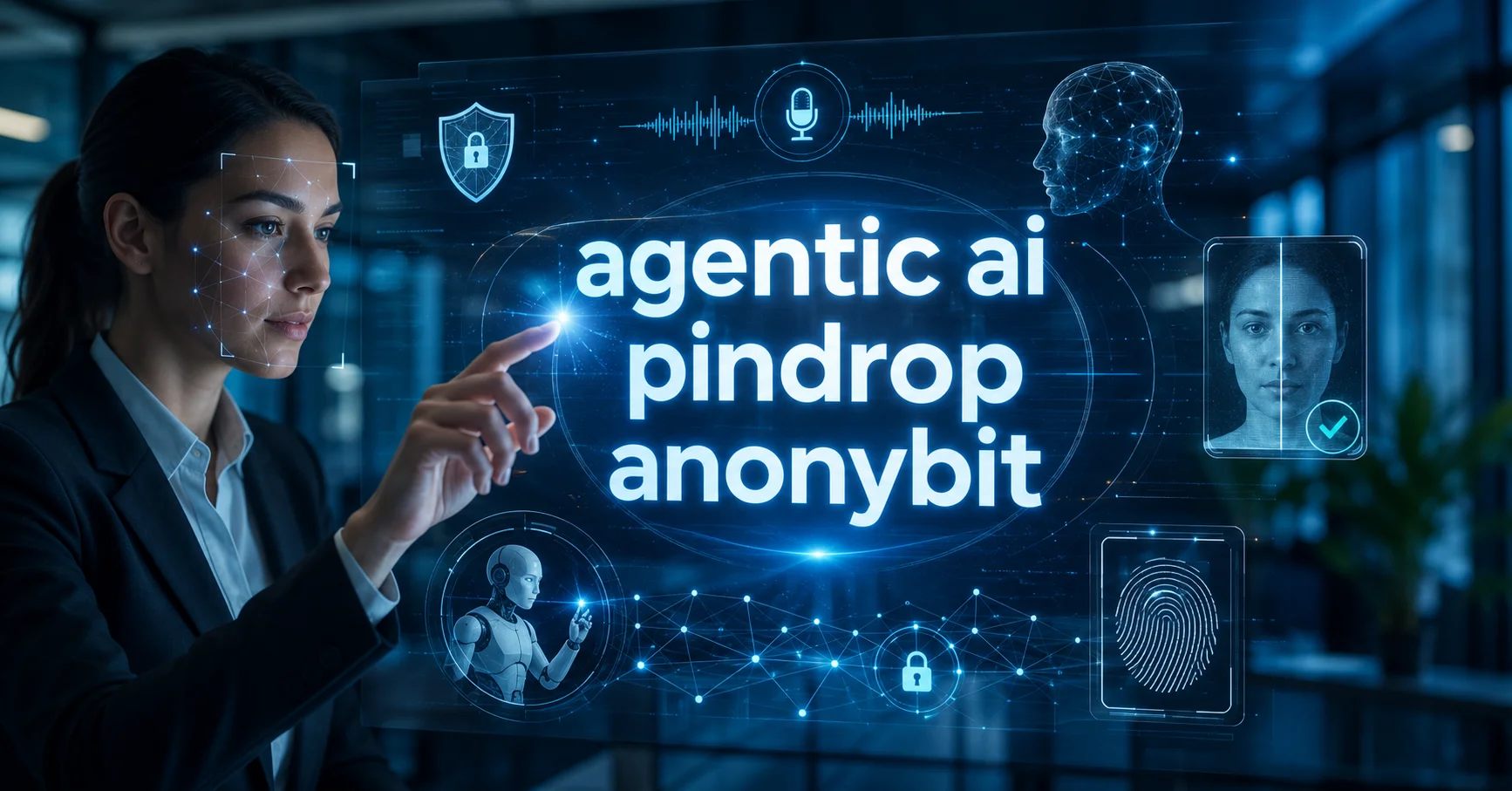
Agentic AI Pindrop Anonybit is a growing search term around the future of identity security, voice fraud protection, and privacy-preserving biometrics. It is not best understood as one simple product. Instead, it describes a security idea where agentic AI, voice intelligence, and decentralized biometric identity work together.
This topic matters because digital trust is getting harder. AI agents can now complete tasks, answer calls, make decisions, and interact with business systems. At the same time, deepfake voices, stolen personal data, and weak authentication methods are creating serious risks for banks, contact centers, healthcare providers, and enterprise platforms.
To understand how AI is also transforming creativity and digital systems, you can explore OpenDream AI Art guide, which explains how modern AI tools are reshaping digital experiences.
In simple words, agentic AI Pindrop Anonybit points to a layered identity security model. Agentic AI handles intelligent decision-making. Pindrop represents voice authentication and deepfake detection. Anonybit represents decentralized biometric identity protection.
What Is Agentic AI?
Agentic AI is a type of artificial intelligence that can work toward a specific goal and take actions to achieve it. It does not only answer prompts like a chatbot. It can plan, use tools, follow workflows, and make decisions based on context.
For example, an AI agent may:
- Verify a customer request
- Route a support case
- Approve or block a transaction
- Trigger a fraud alert
- Escalate suspicious activity to a human team
This is useful, but it also creates risk. If an AI agent can act on behalf of a person, the system must know who authorized that action.
Why Identity Matters in Agentic AI
The more important question is not whether the AI can complete the task, but whether it should be allowed to do it.
The better question is, “Is this AI allowed to complete this task for this person?”
That is where identity verification, voice security, biometric authentication, and zero-trust controls become important.
What Is Pindrop’s Role?
Pindrop is known for voice authentication, fraud detection, and deepfake voice detection. In a security stack, Pindrop-style technology helps analyze whether a voice interaction is real, risky, synthetic, or suspicious.
This is especially important for contact centers. Attackers can use AI voice cloning to imitate customers, employees, executives, or account holders. Traditional security questions and OTPs are no longer enough because stolen data is widely available.
Pindrop Use Cases
Pindrop-type voice intelligence can help with:
- Detecting synthetic or deepfake voices
- Authenticating callers without adding too much friction
- Identifying high-risk call behavior
- Protecting banking and insurance contact centers
- Reducing account takeover attempts
What Is Anonybit’s Role?
Anonybit focuses on privacy-preserving biometric identity. Its approach is based on decentralized biometric infrastructure, which means biometric data is not stored as one exposed template in one central place.
That matters because biometric data is permanent. You can reset a password, but you cannot reset your face, fingerprint, iris, or voice in the same way.
Why Decentralized Biometrics Matter
Centralized biometric databases can become dangerous targets. If breached, they may expose sensitive identity data. A decentralized model reduces this risk by splitting or protecting biometric information so there is no single easy target.
In the context of agentic AI Pindrop Anonybit, Anonybit represents the identity layer. It helps prove that a real authorized person is behind a digital action.
How Agentic AI, Pindrop, and Anonybit Work Together
The real value comes from combining these ideas into one layered security approach.
| Layer | Main Function | Security Benefit |
| Agentic AI | Makes decisions and automates workflows | Faster response to risk |
| Pindrop-style voice intelligence | Detects voice fraud and deepfakes | Protects phone and meeting channels |
| Anonybit-style biometrics | Verifies identity privately | Reduces biometric data exposure |
| Zero-trust policies | Checks every request | Limits unauthorized access |
| Human oversight | Reviews high-risk actions | Prevents blind automation |
Together, this model helps answer three important questions:
- Is the person real?
- Is the voice or interaction authentic?
- Is the AI agent authorized to act?
Practical Step-by-Step Guide to Implement This Security Model
Step 1: Identify High-Risk Workflows
Start with workflows where fraud or unauthorized access would cause real damage.
Examples include:
- Password resets
- Wire transfers
- Account recovery
- Insurance claims
- Healthcare account access
- Executive meeting access
- AI agent approvals
Step 2: Add Voice Risk Detection
For phone-based or meeting-based workflows, add real-time voice risk analysis. This helps detect synthetic voices, suspicious caller behavior, replay attacks, and unusual audio patterns.
Step 3: Use Strong Identity Verification
Do not rely only on passwords, PINs, or security questions. Add biometric step-up verification where appropriate, especially for high-value actions.
Step 4: Protect Biometric Data
Use privacy-first biometric infrastructure. The aim is not only to confirm identity, but also to prevent the creation of a risky centralized database containing sensitive biometric information.
Step 5: Set Agent Permissions
AI agents should never have unlimited authority. Give each agent clear rules.
For example:
- What actions can it take?
- What data can it access?
- When must it ask for human approval?
- When should it block or escalate a request?
Step 6: Keep Human Oversight
Agentic AI should support security teams, not replace them completely. High-risk decisions still need audit trails, review, and accountability.
Benefits of Agentic AI Pindrop Anonybit
Agentic AI Pindrop Anonybit can offer strong benefits when used correctly.
Key benefits include:
- Better protection against AI voice fraud
- Faster fraud detection
- Stronger digital identity verification
- Lower dependence on passwords
- Privacy-focused biometric security
- Better audit trails for AI agent actions
- Improved trust in automated workflows
Pros and Cons
Pros
- Stronger than password-only security
- Useful for contact centers and financial services
- Helps fight deepfake voice attacks
- Supports secure AI automation
- Reduces biometric storage risk when decentralized properly
Cons
- Can be expensive to implement
- Needs strong compliance planning
- May require integration with legacy systems
- False positives can still happen
- Human oversight is still necessary
Who Should Use This?
Agentic AI Pindrop Anonybit is most useful for organizations where identity, voice, and automated decision-making are high-risk.
It is suitable for:
- Banks and fintech companies
- Insurance providers
- Healthcare platforms
- Contact centers
- Enterprise security teams
- Payment companies
- Government service portals
- Businesses using AI agents for approvals or account actions
Small businesses may not need the full stack immediately. However, they should still understand the direction because AI fraud is becoming easier and cheaper to launch.
Final Verdict
Agentic AI Pindrop Anonybit is not just a buzzword. It describes a serious shift in digital security. As AI agents become more active, businesses need stronger ways to prove identity, detect fake voices, and control what automated systems are allowed to do.
The smart approach is layered security. Agentic AI can make fast decisions. Pindrop-style voice intelligence can detect risky voice interactions. Anonybit-style decentralized biometrics can protect identity without creating a single point of failure.
The main lesson is simple: automation without identity is dangerous. If businesses want to use AI agents safely, they must build trust, privacy, and accountability into the system from the start.
FAQs
1. What does agentic AI Pindrop Anonybit mean?
- Agentic AI Pindrop Anonybit refers to a layered security idea that combines autonomous AI decision-making, voice fraud detection, and privacy-preserving biometric identity.
2. Is agentic AI Pindrop Anonybit one product?
- Not exactly. It is better understood as a concept or security architecture rather than one confirmed single product bundle.
3. How does Pindrop help with agentic AI security?
- Pindrop-style technology helps detect voice fraud, synthetic speech, deepfake audio, and suspicious caller behavior in contact centers and communication channels.
4. How does Anonybit protect biometric identity?
- Anonybit focuses on decentralized biometric identity infrastructure, which reduces the risk of storing sensitive biometric data in one central database.
5. Which industries need this most?
- Banks, fintech companies, insurers, healthcare platforms, contact centers, and enterprises using AI agents for sensitive workflows need this type of layered identity security.

Charles Brook is the Founder of Vantiro Media and a University of Nairobi (B.Com) graduate. As a business software specialist, he helps Kenyan SMEs navigate eTIMS compliance, compare tools like QuickBooks, Zoho, & Sage, and choose the best budget-friendly accounting systems.