
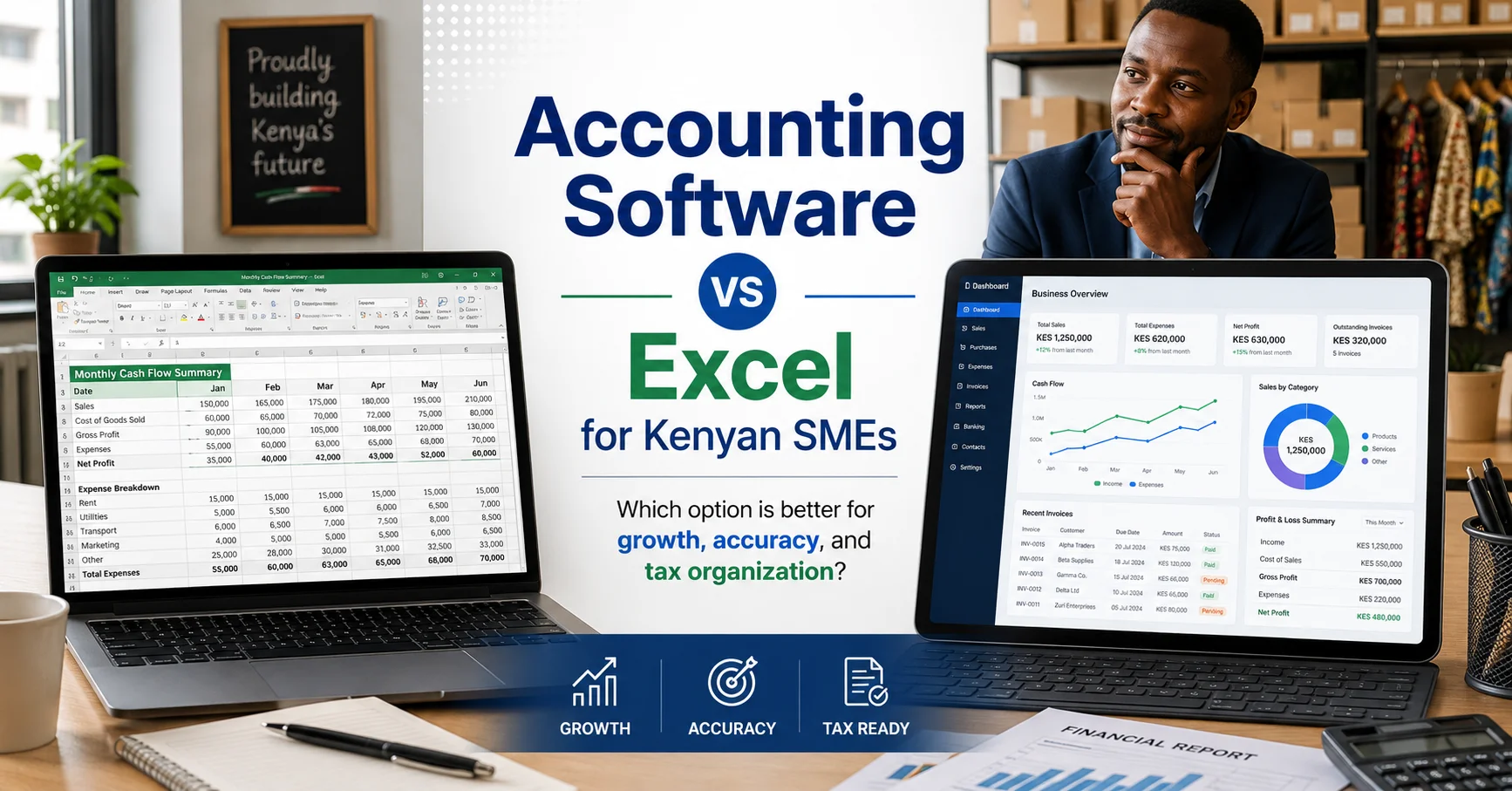
For many small and medium-sized businesses in Kenya, Excel is the first tool used to track sales, expenses, stock, invoices, and cash flow. It is simple, familiar, and affordable. But as a business grows, the question becomes serious: should Kenyan SMEs continue using Excel, or move to accounting software?
The answer depends on the size of the business, number of transactions, tax requirements, reporting needs, and how much financial control the owner wants. Excel can work for a very small business, but accounting software is usually better for SMEs that need accurate records, faster reports, better invoicing, inventory control, and stronger tax organization.
This guide compares accounting software vs Excel for Kenyan SMEs in a practical way so business owners can make a better decision.
Quick Comparison: Accounting Software vs Excel
| Factor | Excel | Accounting Software |
| Best for | Very small businesses | Growing SMEs |
| Cost | Low or free | Monthly or yearly subscription |
| Invoicing | Manual | Automatic |
| Error risk | Higher | Lower |
| Reports | Manual formulas | Auto-generated |
| Inventory tracking | Basic and manual | More organized |
| Customer credit tracking | Difficult | Easier |
| eTIMS/tax records | Limited | Better if supported |
| Multiple users | Risky | Safer with user access |
| Business growth | Limited | More scalable |
What Is Excel Used for in Small Business Accounting?
Excel is a spreadsheet tool. Many Kenyan SMEs use it to record daily sales, supplier payments, customer balances, stock movement, petty cash, payroll summaries, and profit calculations.
For a startup or small shop with few transactions, Excel can be enough in the beginning. A business owner can create simple columns for date, customer name, amount, payment method, expense type, and balance. It gives flexibility and does not always require extra monthly costs.
Microsoft also provides official Excel accounting templates that can help businesses manage invoices, budgets, expenses, and cash flow in a structured way.
However, Excel is not full accounting software. It does not automatically manage double-entry accounting, invoice history, tax reports, user access, audit trails, or real-time dashboards unless the owner builds these systems manually.
What Is Accounting Software?
Accounting software is a digital system built specifically for managing business finances. It helps SMEs record income, expenses, invoices, payments, bank transactions, inventory, payroll, taxes, and financial reports in one organized place.
Popular accounting software options used by SMEs may include QuickBooks, Zoho Books, Sage, Xero, Wave, and other local or regional solutions. If you want a detailed software comparison, you can read this guide on QuickBooks vs Sage vs Zoho Books in Kenya.
Unlike Excel, accounting software is designed to reduce manual work and improve accuracy. It can generate invoices, track unpaid bills, create profit and loss reports, monitor cash flow, and give business owners a clearer view of financial performance.
Accounting Software vs Excel: Main Differences
The biggest difference is control. Excel gives flexibility, but accounting software gives structure.
Excel depends heavily on manual entry. If a formula breaks, a cell is deleted, or someone enters the wrong amount, the entire report can become unreliable. Accounting software reduces this risk because transactions follow a proper accounting flow.
For example, when you create an invoice in accounting software, it can automatically update sales, accounts receivable, customer balance, tax records, and reports. In Excel, you may need to update several sheets manually.
For a small business with ten transactions per week, Excel may be manageable. For a growing SME with daily sales, suppliers, employees, stock, and tax records, accounting software becomes more practical.
Where Excel Works Well for Kenyan SMEs
Excel is not useless. In fact, it can be a good starting point for micro-businesses and early-stage SMEs.
Excel may work well when the business has very few transactions, no complex inventory, no large customer credit system, and no need for advanced reporting. It is also useful for simple budgeting, quick calculations, price lists, sales summaries, and planning.
A small home-based business, freelancer, small kiosk, or side hustle may start with Excel before moving to software. The key is to keep the file clean, backed up, and updated regularly.
But the owner should not confuse “recording numbers” with proper accounting. Excel can help you track money, but it does not automatically protect the business from errors, missing records, weak tax documentation, or poor financial controls.
Where Excel Becomes a Problem
Excel becomes risky when a business grows beyond basic recordkeeping.
Common problems include broken formulas, duplicate entries, missing invoices, poor backup habits, accidental deletion, weak security, and difficulty tracking who changed what. These issues can lead to wrong profit figures, poor cash-flow decisions, and tax reporting problems.
Another major issue is time. If an owner or accountant spends hours updating spreadsheets, checking formulas, and preparing reports manually, the business is losing productive time.
Excel also becomes weak when multiple people need access. If sales staff, accountants, managers, and business owners all need financial data, one spreadsheet can quickly become messy and unreliable.
Why Accounting Software Is Better for Growing SMEs
Accounting software is better for Kenyan SMEs that want accuracy, speed, and better decision-making.
It helps business owners know who owes them money, which expenses are increasing, which products are profitable, and whether the business has enough cash to pay suppliers, rent, salaries, and taxes.
Good accounting software can also create reports such as profit and loss statements, balance sheets, cash flow reports, customer statements, supplier balances, tax summaries, inventory reports, and sales reports.
These reports help SMEs make decisions based on real numbers, not guesswork. For example, a business owner may think sales are high, but accounting software may show that expenses are rising faster than revenue. That insight can prevent financial damage before it becomes serious.
For more options, read this guide on the best accounting software for small businesses in Kenya.
eTIMS and Tax Compliance in Kenya
For Kenyan SMEs, tax compliance is a major reason to move from Excel to accounting software or a more structured invoicing system.
Kenya Revenue Authority explains that eTIMS is an electronic Tax Invoice Management System used for electronic invoicing. Businesses should check the official KRA eTIMS guidance to understand onboarding, invoicing, and compliance requirements.
Excel may help with internal tracking, but it is not enough on its own if the business needs proper electronic invoicing and tax-ready records. Accounting software can make compliance easier when it supports proper invoicing, tax reports, invoice history, and organized financial records.
If eTIMS is your main concern, check this guide on eTIMS-compliant accounting software in Kenya. You can also read this simple explanation of what is eTIMS in Kenya if you need the basics first.
Cost Comparison: Excel vs Accounting Software
Excel looks cheaper at first. Many businesses already have Microsoft Office, Google Sheets, or another spreadsheet tool. There may be no extra monthly cost.
Accounting software often has a subscription fee. Some tools charge monthly or yearly depending on features, number of users, invoices, inventory, payroll, or advanced reporting.
But cost should not be judged only by subscription price. A cheap tool can become expensive if it causes errors, missed payments, tax issues, or poor financial decisions.
The real question is: how much time and risk is Excel costing the business?
If accounting software saves several hours every month, reduces mistakes, improves collections, and gives better reports, the subscription may be worth it.
Which Businesses Can Stay on Excel?
A Kenyan SME can stay on Excel if the business is still very small, has simple transactions, does not sell on credit, does not manage complex inventory, and has a reliable person maintaining the spreadsheet.
Excel may be enough for freelancers, very small service businesses, small side businesses, early-stage startups, businesses with few monthly transactions, and simple expense tracking.
Even then, the business should maintain clear file names, backups, invoice records, and monthly summaries.
Which Businesses Should Use Accounting Software?
A business should move to accounting software when transactions become regular, stock becomes harder to track, customers buy on credit, supplier payments increase, tax records become more demanding, or the owner needs accurate monthly reports.
Accounting software is better for retail shops, e-commerce businesses, restaurants, cafes, agencies, consultancies, wholesalers, import and export businesses, SMEs with employees, and SMEs with VAT or eTIMS requirements.
If the business owner cannot quickly answer “Who owes me money?”, “What is my profit this month?”, or “Which expenses are increasing?”, it is time to upgrade.
Practical Migration Plan from Excel to Accounting Software
Moving from Excel to accounting software does not have to be difficult. The business should start by cleaning existing records.
First, organize customer lists, supplier lists, product lists, unpaid invoices, unpaid bills, bank balances, opening stock, and tax information. Then choose software that fits the business size and Kenya-specific requirements.
Next, import or enter opening balances carefully. This is where many businesses make mistakes. If possible, involve an accountant during setup to avoid wrong balances from day one.
After setup, train the team. Even the best software fails when users enter data carelessly. Clear rules should be created for invoicing, expense recording, payment updates, stock entry, and monthly review.
For audit and review purposes, businesses can also learn about common account audit software used in Kenya to understand how better records support cleaner audits.
Final Verdict: Accounting Software or Excel?
Excel is useful for starting a small business, but it is not the best long-term accounting system for growing Kenyan SMEs.
For a very small business, Excel can work if records are simple and carefully maintained. But for SMEs that need better invoicing, eTIMS readiness, customer tracking, inventory control, reports, and tax organization, accounting software is the smarter choice.
The best decision is not based only on cost. It is based on accuracy, compliance, time saved, and business growth.
If your business is growing and your spreadsheet is becoming harder to manage, that is a clear sign: Excel has done its job, and now your SME needs proper accounting software.
FAQs
1. Is Excel enough for small business accounting in Kenya?
Excel can be enough for very small businesses with simple transactions. However, growing SMEs usually need accounting software for better accuracy, reporting, invoicing, and tax organization.
2. Is accounting software better than Excel?
Yes, accounting software is better for businesses with regular transactions, customer credit, supplier payments, inventory, employees, and tax reporting needs. Excel is flexible, but accounting software is more structured and reliable.
3. Can Kenyan SMEs use Excel for eTIMS?
Excel can help with internal tracking, but businesses should follow KRA eTIMS requirements for electronic tax invoicing. SMEs should use proper eTIMS-supported processes or software where needed.
4. When should a business move from Excel to accounting software?
A business should move when spreadsheets become hard to manage, reports take too long, errors increase, or the owner needs accurate financial data for decisions.
5. What is the best accounting software for Kenyan SMEs?
The best accounting software depends on business size, budget, invoicing needs, inventory, tax requirements, and local support. SMEs should compare features, eTIMS compatibility, ease of use, and total cost before choosing.

Charles Brook is the Founder of Vantiro Media and a University of Nairobi (B.Com) graduate. As a business software specialist, he helps Kenyan SMEs navigate eTIMS compliance, compare tools like QuickBooks, Zoho, & Sage, and choose the best budget-friendly accounting systems.
Kenya SME Software Brief
Need Help Choosing Accounting Software in Kenya?
Get simple buying tips, eTIMS guidance, VAT record advice, pricing comparisons, and software recommendations for Kenyan SMEs.
- eTIMS tips
- VAT records
- Pricing guides
- Software comparisons
No spam. Just useful Kenya business software updates and simple accounting guides.
Free Checklist